Templates
Tested templates for ten shapes
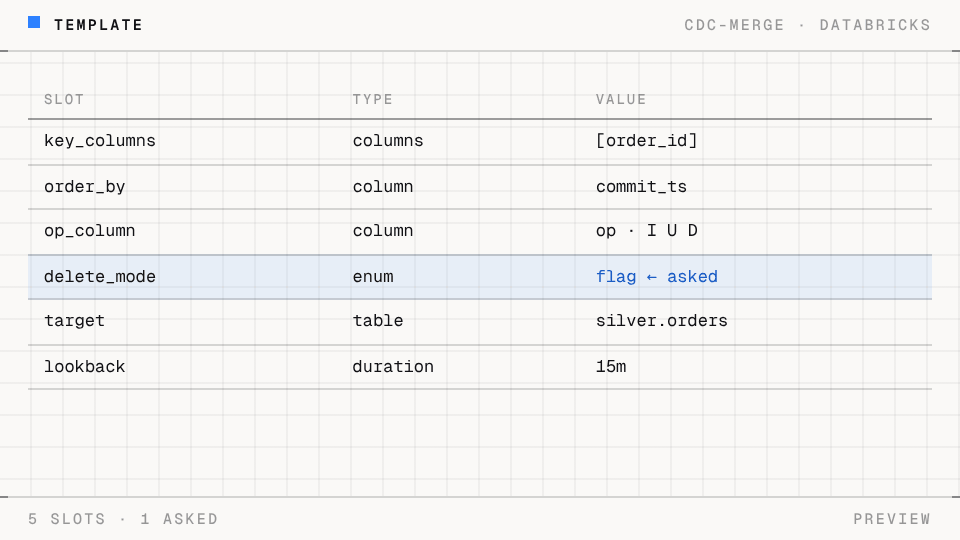
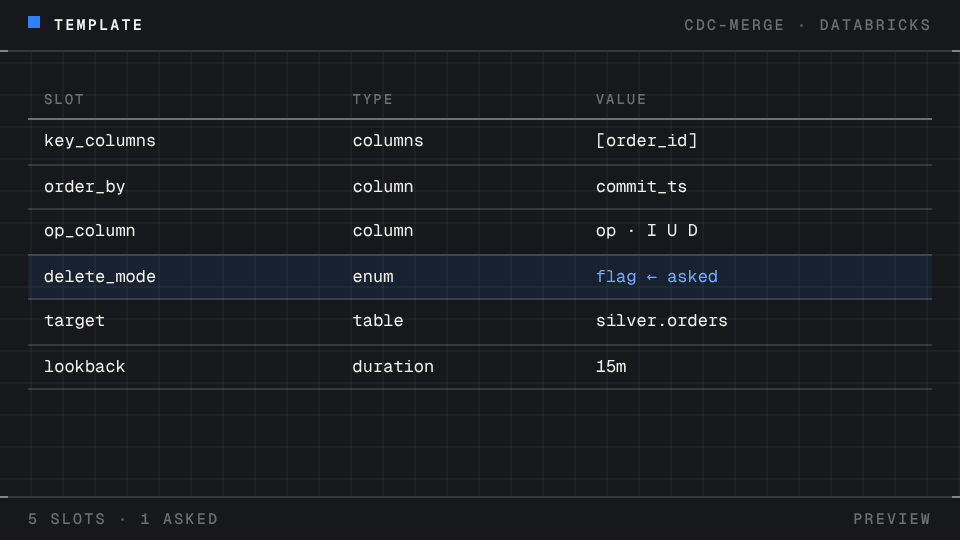
Most production pipelines follow about ten shapes. Emolysis starts from a tested template for the shape and your platform, and asks only for the slots it is missing.
The agentic lakehouse for data engineering and analytics.
In private development. Nothing is released yet.
Emolysis puts a team of agents at your direction from your laptop: to investigate business questions, develop dashboards, and build and test pipelines for your data platform.
What it does
Business users want answers to the questions that matter. Data teams need the definitions, transformations and pipelines behind those answers. Emolysis brings both into one development workflow, built from a profile of your platform, tested templates for the shapes you build and golden tests that run on your machine first, with you directing the work and reviewing the results.
Dashboards
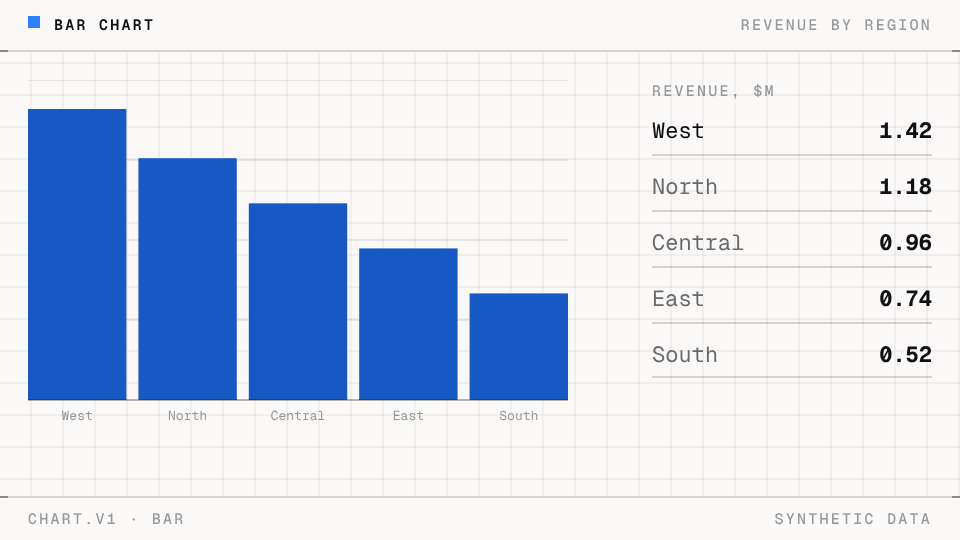
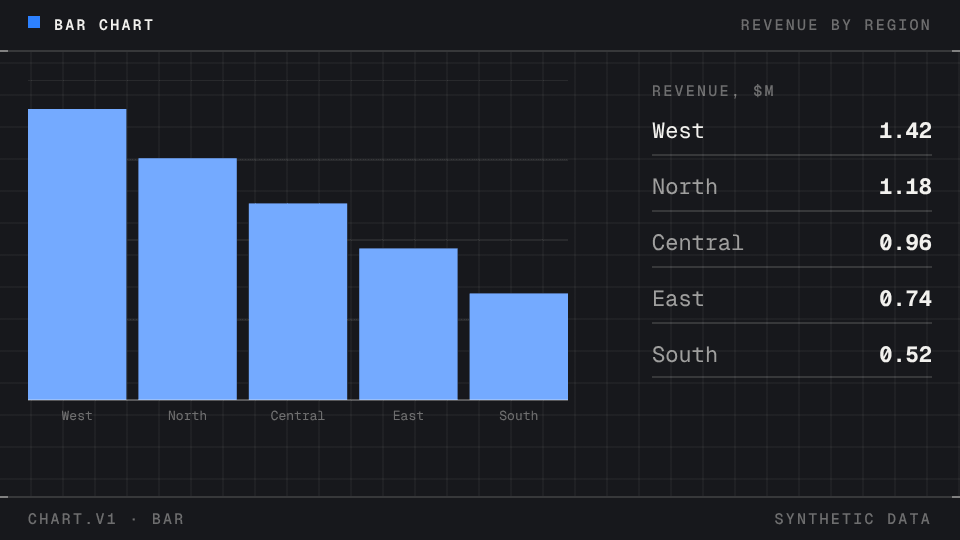
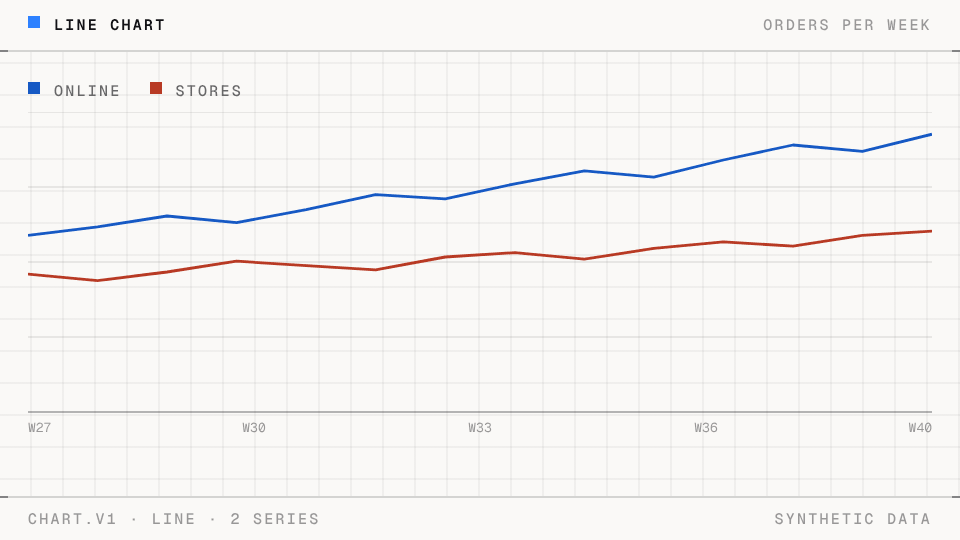
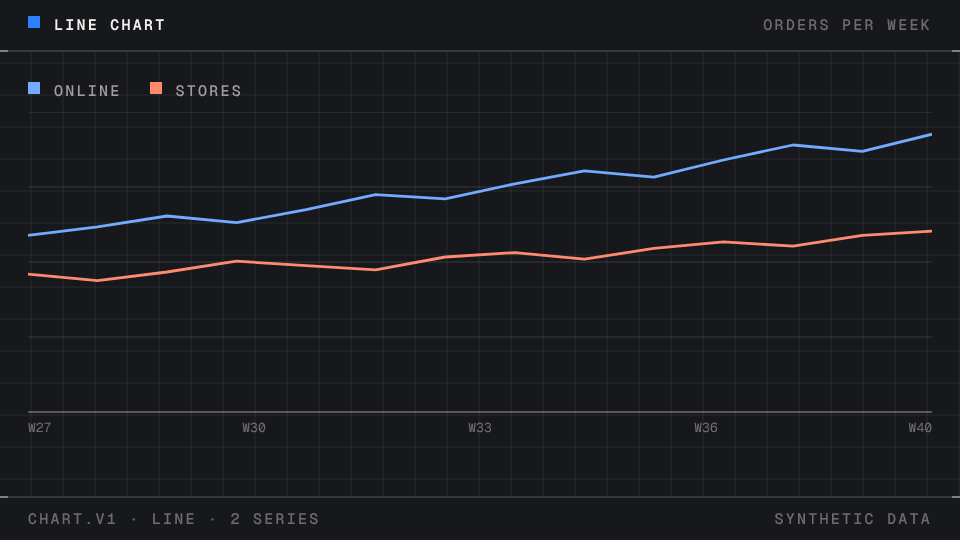
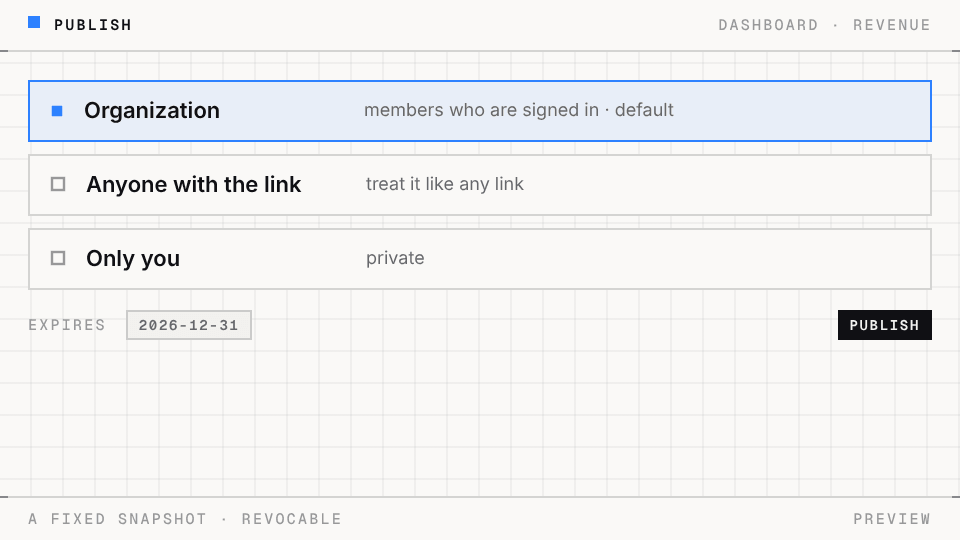
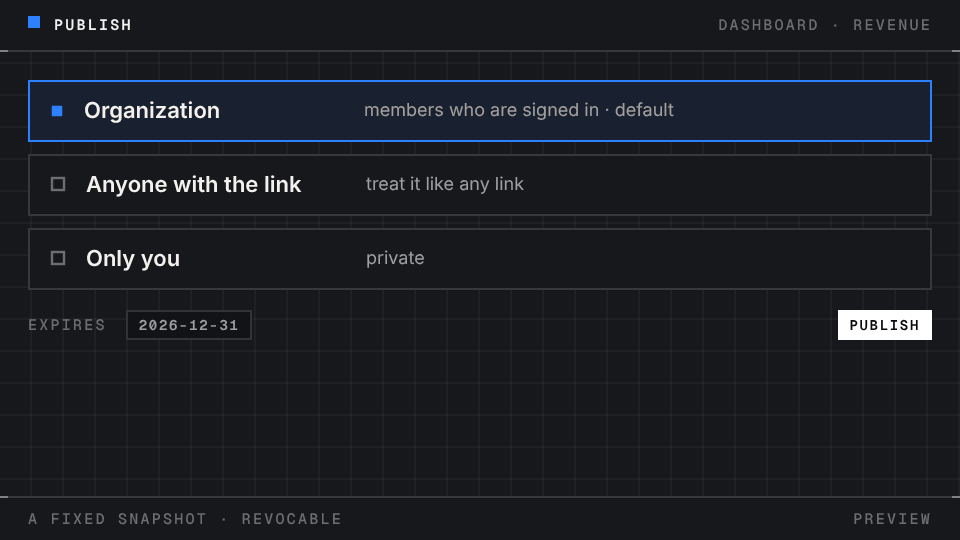
Ask a business question and Emolysis builds the tested gold table behind it, charts it and gives you a link to share. The sample dashboard shows the charts on synthetic data.
Open the sample dashboard
Templates
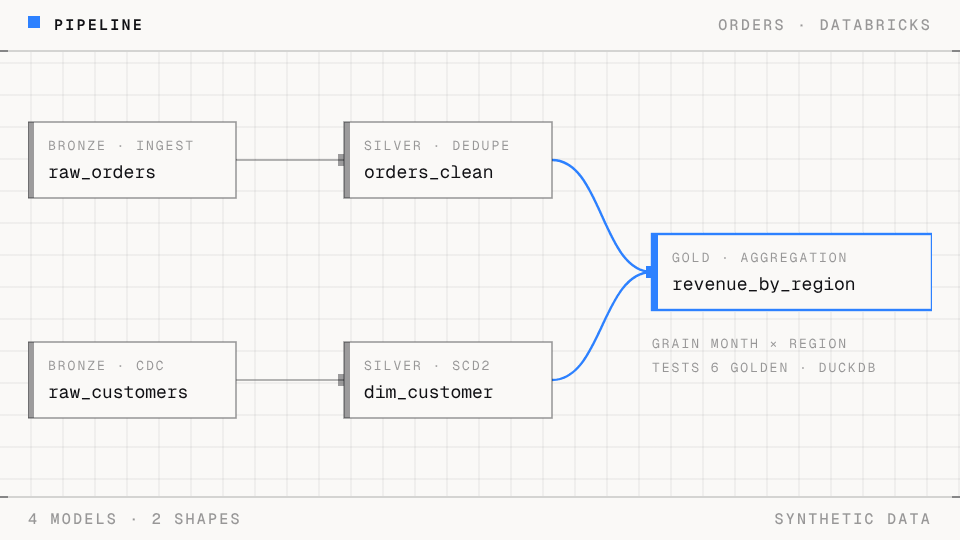
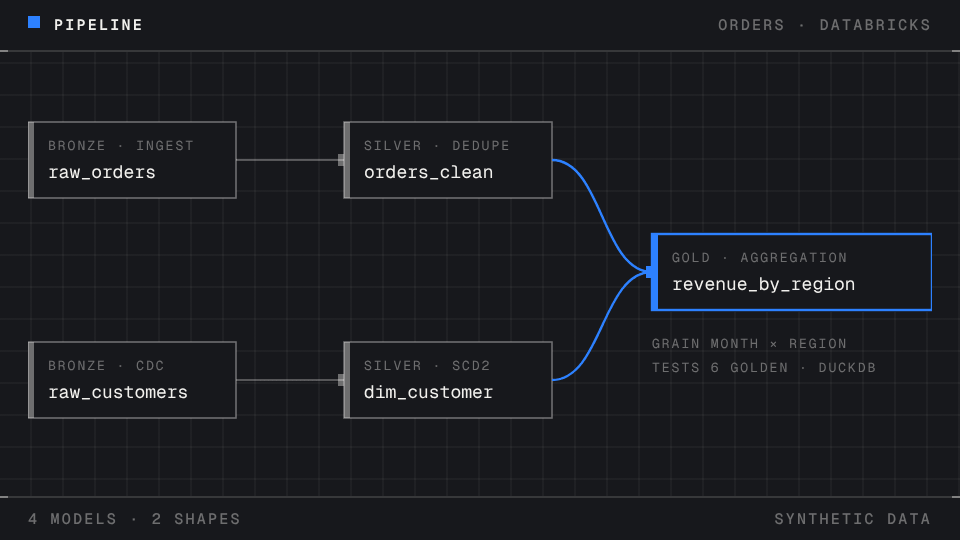
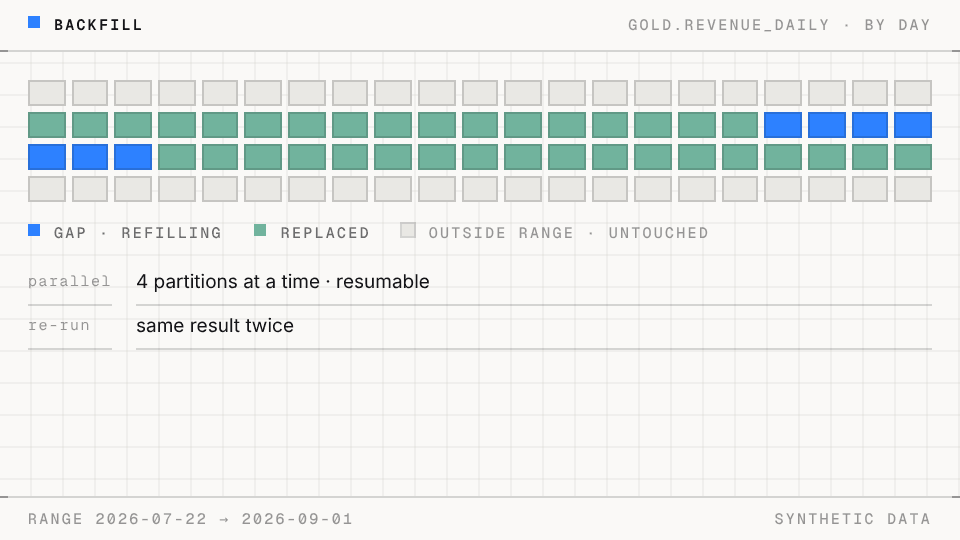
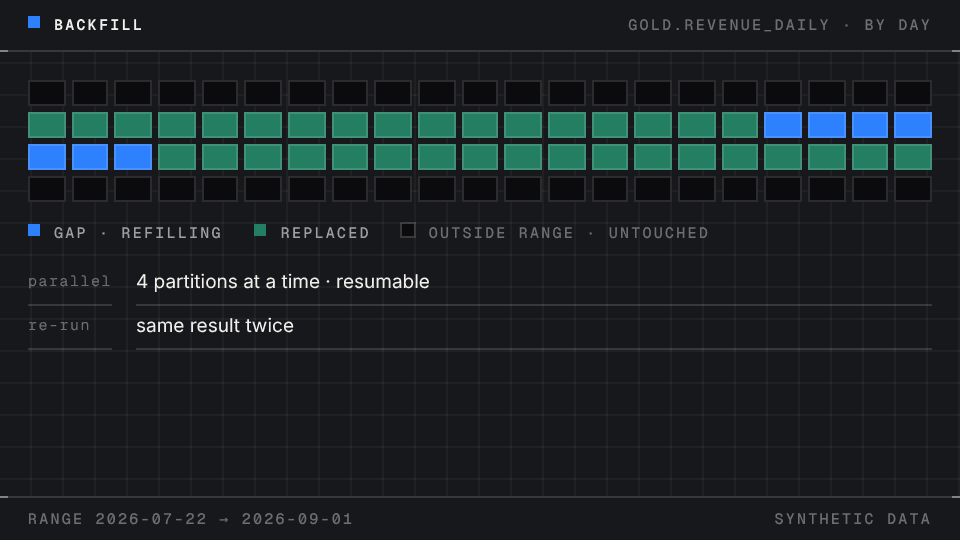
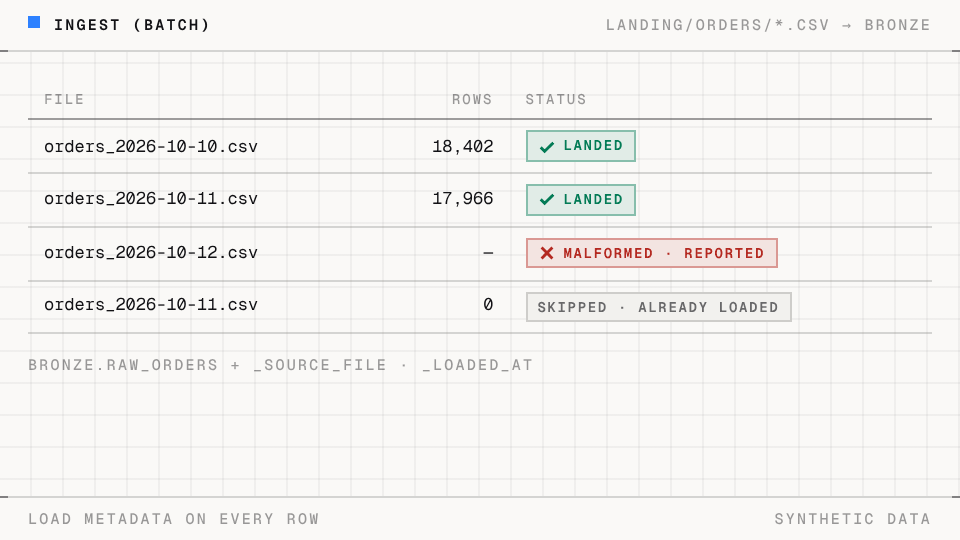
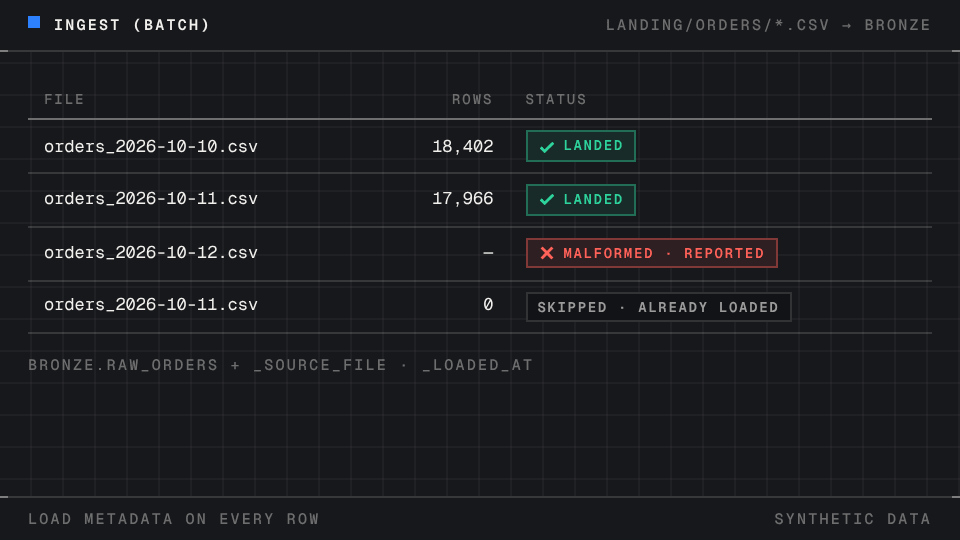
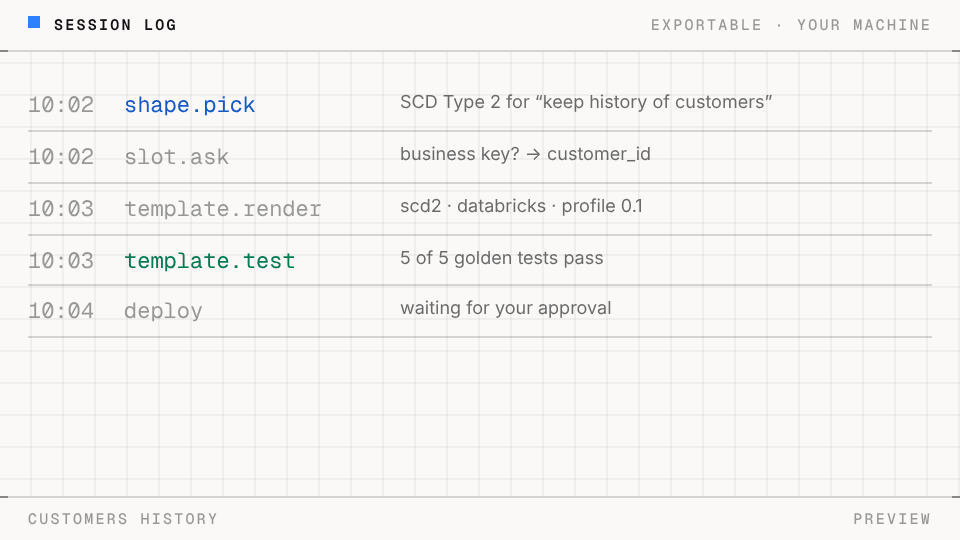
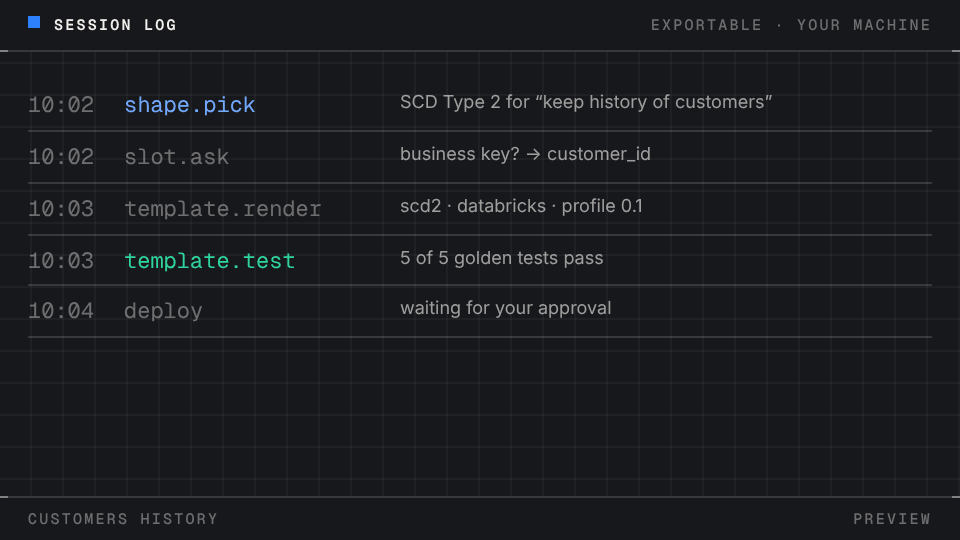
Most production pipelines follow about ten shapes. Emolysis starts from a tested template for the shape and your platform, and asks only for the slots it is missing.
Platform profile
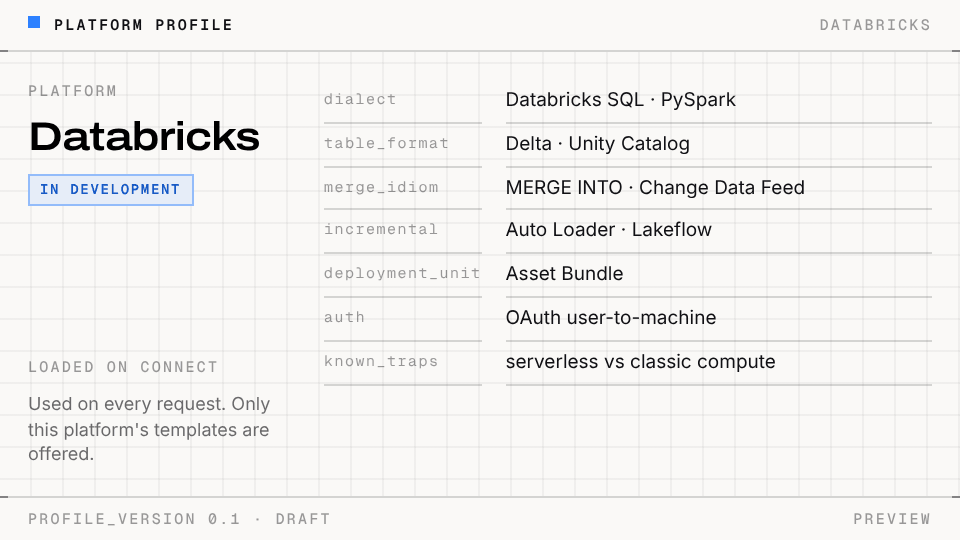
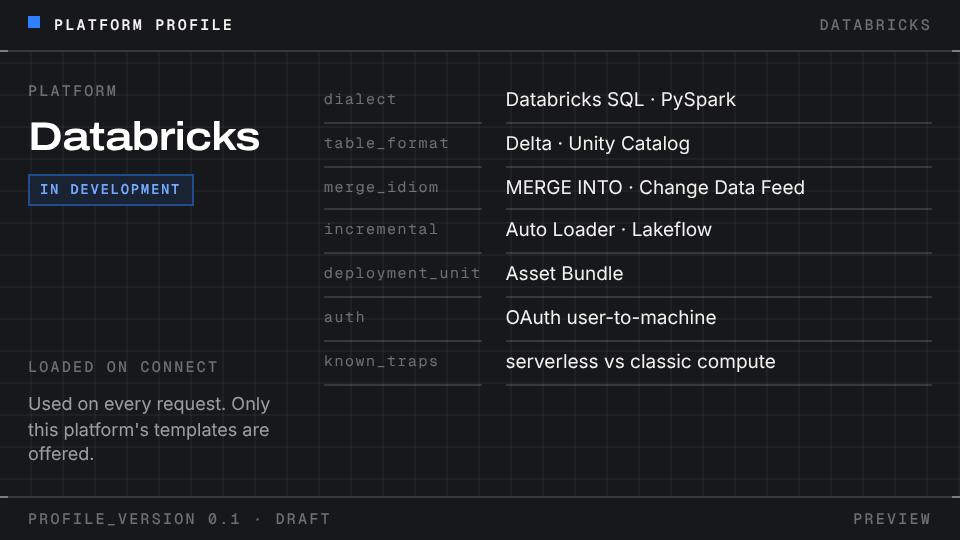
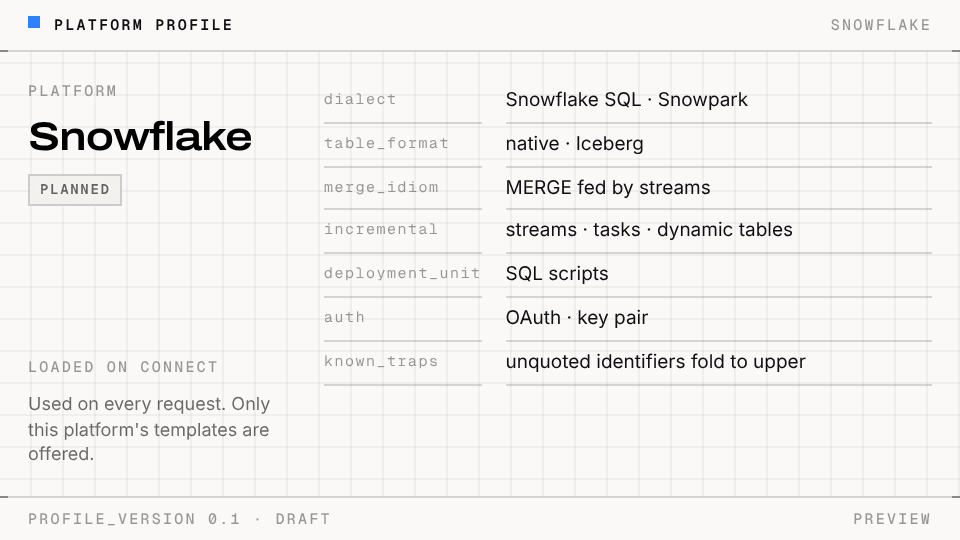
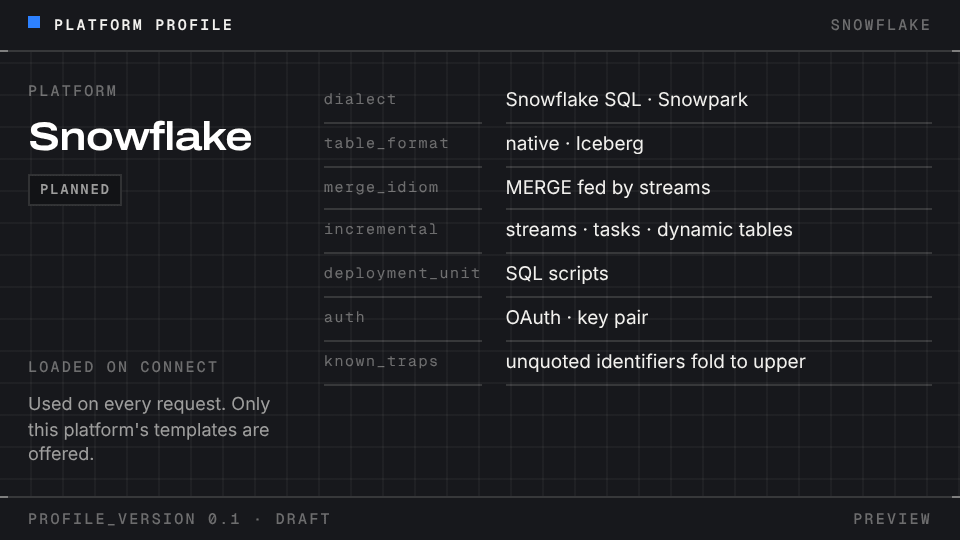
Connecting a workspace loads a platform profile: dialect, table format, merge idiom, deployment unit and known traps. Only your platform's templates are offered.
Local loop
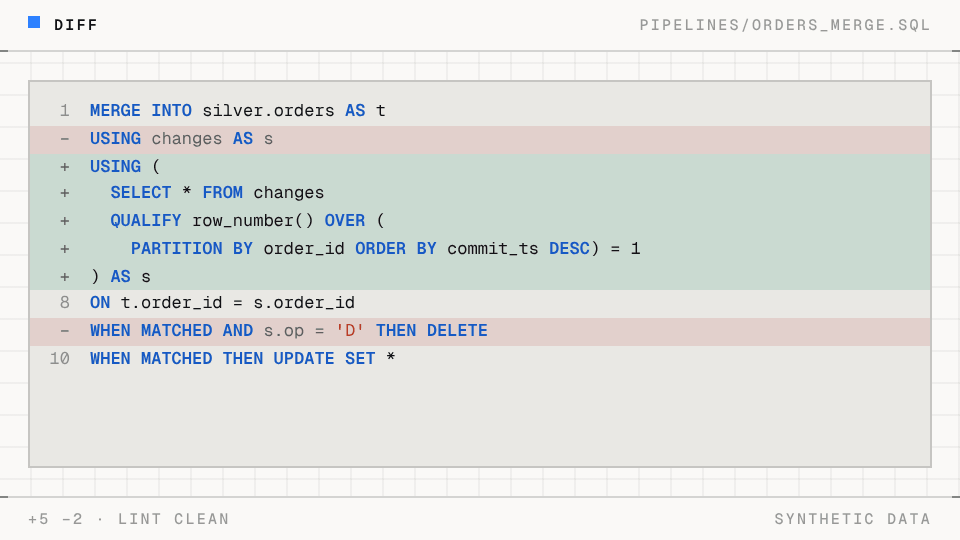
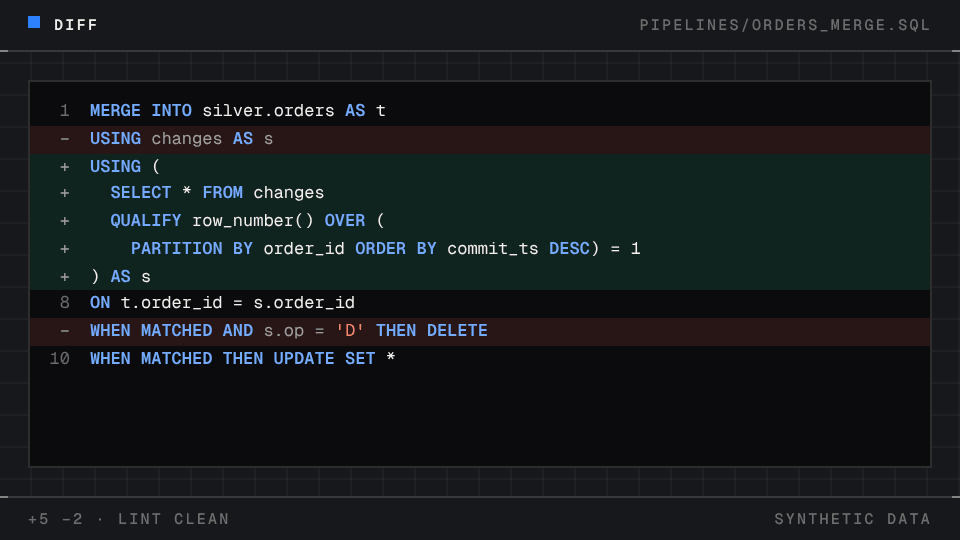
Emolysis pulls a small sample into DuckDB and iterates on your machine. Every pipeline the agent writes is linted for your platform and tested against golden data before anything is deployed; testing on the sample spends no warehouse compute.
Golden tests
Each template ships with fixed inputs and expected outputs. A red test goes back to the template, not to production, and the agent deploys only after a green run.
Deploy
A green run deploys as your platform's native unit: Databricks Asset Bundles first, then Snowflake SQL and Fabric workspace items. You review it like any other change.
Pull requests · planned
Planned: a GitHub App that runs lint, golden tests on DuckDB, a cost estimate and a preview dashboard on each pull request. Green checks are the deploy gate.
MCP
emo mcp brings the same commands to any editor or coding agent that supports MCP, with one configuration entry. Every command except token management is one tool.
How it works
Every request follows the same path, from the business question to the dashboard and the tested pipeline behind it, and nothing reaches your platform until its tests pass.
Step 01
Start from a business question, such as monthly revenue by region, or name the pipeline you need. Emolysis finds the sources that can answer it: the tables in the platform you connect, sampled to your machine.
/dashboard "monthly revenue by region"
Step 02
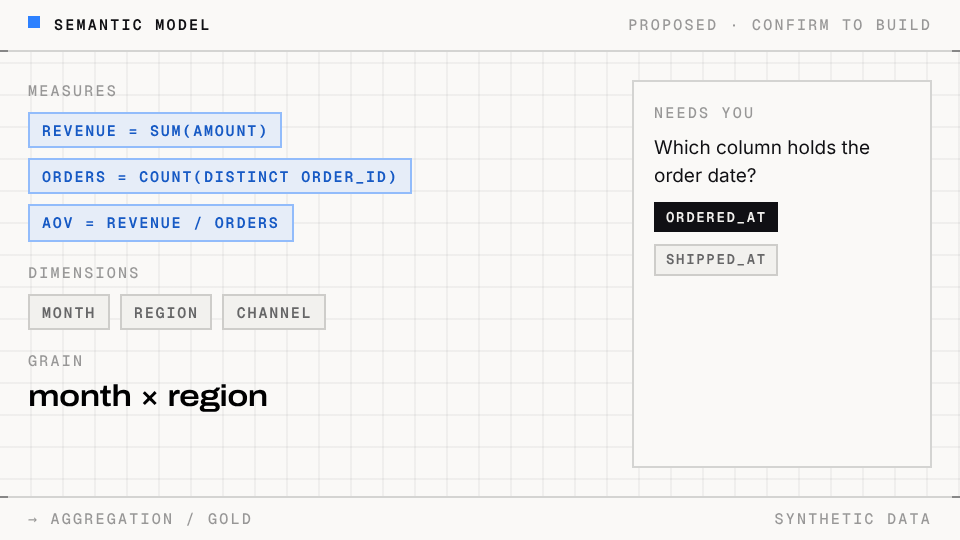
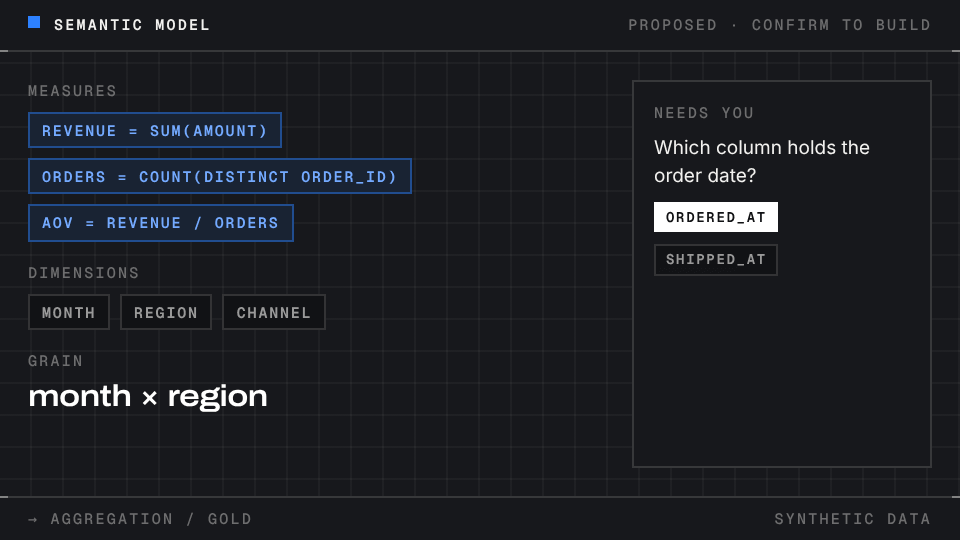
You confirm what the metric means: its measures, grain and joins. The agents send your request, with the schema details they need, to the AI model provider you choose.
semantic model · confirmed by you
Step 03
Emolysis fills the template for your platform and runs its golden tests on DuckDB on your machine. A failing test sends it back to the template, not to production.
template.test · 6 of 6 match
Step 04
You see the dashboard on your machine first. A green run deploys as your platform's native unit, such as a Databricks Asset Bundle, and publishes the dashboard when you ask for one.
pipeline.deploy · bundle to dev
Local-first by design
Development happens on your machine. Production runs on your platform, under your account. You choose the model provider.
Your machine
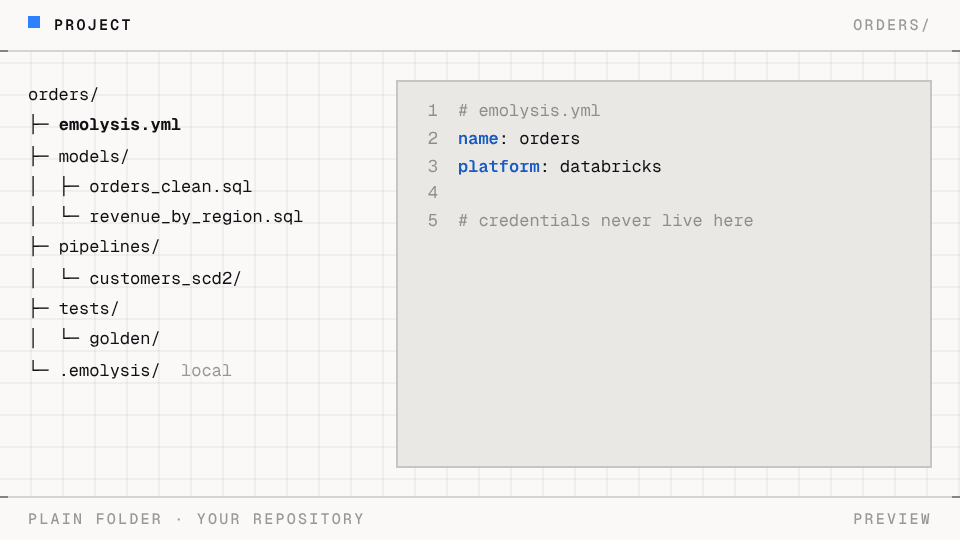
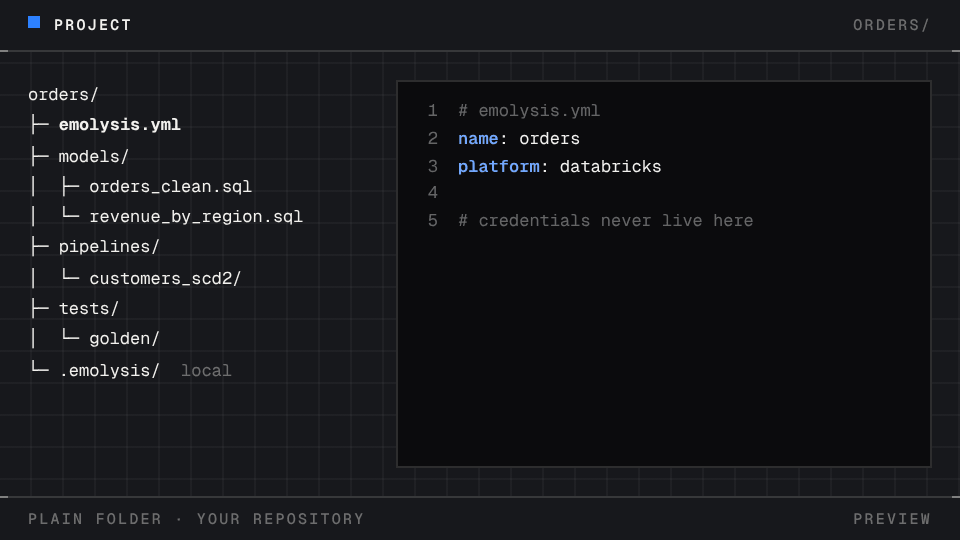
The engine, DuckDB and your project's samples live on your machine. Templates run and golden tests have to pass there before anything is deployed. Your platform credentials stay on your machine, in its credential store.
Your platform
Deployed pipelines and queries against your platform run there, under your account, in its native units. Emolysis's own services never connect to your data platform.
Your key
Every plan accepts your own key from the model provider you choose, billed by that provider. Pro, Max and Team include model usage, so you do not need a key.
What leaves your machine To write code, the agent sends prompts to the AI model provider you choose. A prompt can include table and column names, schemas and sample values from your data. With a paid plan's model usage, prompts pass through Emolysis's metering service, which is designed not to store or log them. A dashboard leaves your machine when you publish it, and only then.
Pipeline shapes
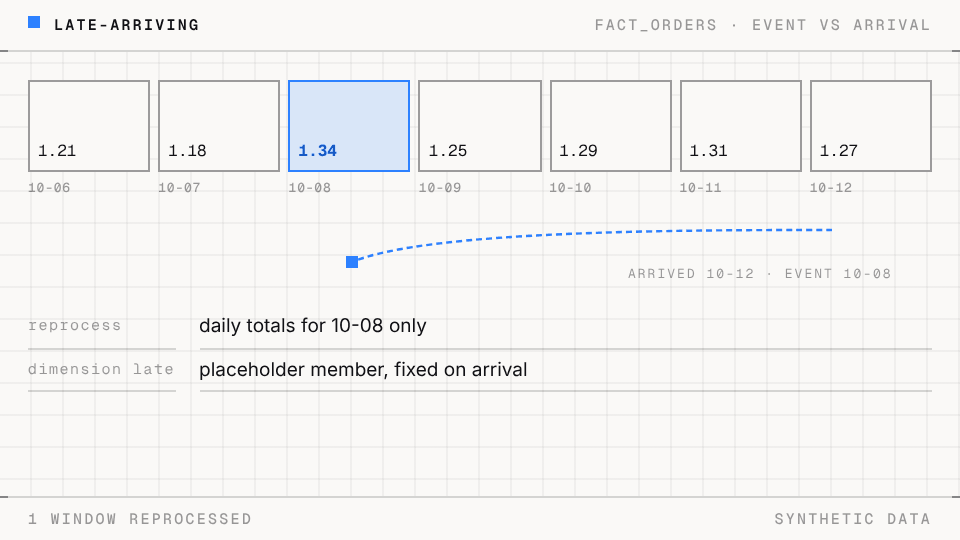
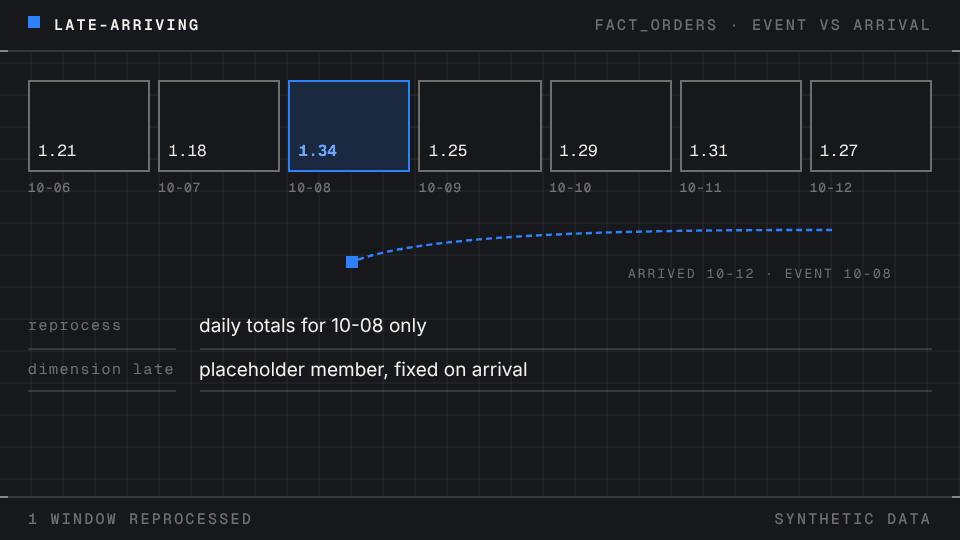
Most production pipelines follow one of about ten shapes, and each shape has a known correct form on each platform. Each shape has a template per platform, with test fixtures and expected outputs.
Platforms
Development runs locally on DuckDB. Production runs on your platform, under your account, in its native deployment units. Databricks comes first; Snowflake and Microsoft Fabric are in development. PostgreSQL, MySQL and SQLite are in development as sources, and SQL Server is planned.
Deploy target
In development
The first target. Writes for Delta tables and Unity Catalog and deploys as Databricks Asset Bundles.
Deploy target
Planned
Writes for streams, tasks and dynamic tables, with Snowflake's own identifier rules.
Deploy target
Planned
Writes for lakehouses in OneLake and deploys notebooks to your Fabric workspace.
Source
Planned
Planned as a source: operational tables and change data from SQL Server, read for your pipelines.
Source
In development
Reads tables from PostgreSQL as a source: mirrors its catalog and samples tables into DuckDB on your machine.
Local engine
Local dev loop
The local development loop: every pipeline runs and passes its tests on DuckDB before it touches your platform.
Where you use it
You work from the desktop app, the emo command line and an editor or coding agent that supports MCP. Checks on your GitHub pull requests are planned.
Plans
Free is bring your own key. Pro, Max, Team and Enterprise add platforms, sharing and model usage, with GitHub checks planned. These are planned prices; nothing can be bought yet.
Solo work
01
$0/mo
Bring your own model key
Model usage is billed by your provider. The local engine, DuckDB and one platform connection.
Individuals
02
$20/mo
or $17/mo billed annually
Included model usage, every connector, the full template library, sharing and GitHub checks (planned).
Heavy use
03
from$100/mo
5x or 20x Pro's usage
Priority at busy times and early access to new templates and connectors.
Teams
04
from$25/seat/mo
$20 per seat billed annually
2 to 150 seats, with included model usage per seat. Planned: shared catalog, organization workspace, audit export and SSO.
Companies
05
$20/seat + usage
Billed annually
Metered model usage within spend limits, or your organization's own key. An SLA and options for running Emolysis in your own environment (planned).
USD, excluding tax · every plan accepts your own model key · allowances are set before paid plans open
Questions
Emolysis is the agentic lakehouse for data engineering and analytics, made by Bandpey GmbH. Direct a team of agents from your laptop to investigate business questions, develop dashboards, and build and test pipelines for your data platform. Databricks comes first, with Snowflake and Microsoft Fabric planned. Instead of writing each pipeline from scratch, it picks one of ten known pipeline shapes, fills a template written for your platform, and proves the result with golden tests on DuckDB on your machine.
It means the development loop runs on your machine. Emolysis pulls a small sample of your data into DuckDB, fills templates and runs golden tests locally, so iterating does not spend warehouse compute. Production still runs on your platform, under your account. It does not mean that nothing leaves your machine: to write code, the agent sends prompts to the AI model provider you choose. With a paid plan's model usage, those prompts pass through Emolysis's metering service, which is designed not to store or log their content. Dashboards leave your machine when you publish them, and only then.
Some of it can. To write code, the agent sends prompts to the AI model provider you choose, and a prompt can include table and column names, schemas and sample values from your data. With a paid plan's model usage, prompts pass through Emolysis's metering service, which is designed not to store or log them. A dashboard leaves your machine when you publish it, and only then. Your platform credentials stay in your machine's credential store, and samples you pull are stored in the project on your machine.
Databricks is first and in development. Snowflake and Microsoft Fabric are planned; none of the three has run on a real account yet. PostgreSQL, MySQL and SQLite are in development as sources, and SQL Server is planned as a source. DuckDB is the local engine on your machine for development and golden tests; it is not a production target.
There is a Free plan. It is bring your own key: you add a key from the model provider you choose, pay that provider for what you use, and pay Emolysis nothing. Like every plan, it is an Emolysis account. Paid plans add more platforms, the full template library, sharing and the planned GitHub App, and Pro, Max and Team include model usage. Nothing can be bought or downloaded yet.
There is no release date yet. Emolysis is in private development, and the Databricks loop comes first: connect a workspace, ask a business question, and get a tested gold pipeline plus a shared dashboard. We announce availability on the news page.
Where things stand
By invitation while we build · Databricks first
Early access is for data engineering teams on Databricks with real pipelines and business questions to try Emolysis on. The docs describe how it works.
Status
There is no public release or download yet, and Emolysis is not something you can use today. Early access is by invitation, and you can ask through the request form. The sample dashboard runs on synthetic data.
Updates
We announce releases on the news page. The request form also has an optional newsletter, at most once a month.